

On May 14, 2026, we hosted the SSC Leadership Roundtable, bringing together service supply chain executives from across industries for an honest, peer-driven conversation about what it takes to lead a service supply chain that drives real business outcomes. There were no vendor pitches or surface-level talking points, just leaders exchanging what’s working, what isn’t, and where the biggest opportunities lie across planning, AI, operating model maturity, and making service supply chain strategy visible at the executive level.
One theme surfaced early and stayed throughout: the service supply chain creates enormous business value, and the leaders who can quantify and communicate that value are the ones winning executive alignment, investment, and influence. McKinsey research shared during the session backs this up with hard numbers, showing that companies with a strategic focus on service can achieve 2x to 2.5x higher total shareholder return, approximately 30% gross margin on service parts, and service margins up to 4x higher than production margins.
The conversation centered on how service leaders can speak the language of the CFO, connecting service performance to uptime risk, revenue exposure, contract profitability, and growth so that investment decisions reflect the true value of what service delivers. As one participant put it: “How do you quantify an enabler enough to make a difference?”
It’s the right question, and the group had a lot to say about it.
1. Service supply chain operates differently from the forward supply chain, and deserves its own approach.
Because demand is sporadic, customer expectations are immediate, and the cost of failure shows up in real time as downtime, SLA penalties, and customer churn, the planning models, systems, and assumptions built for the forward supply chain don’t translate directly. Leaders who build SSC-specific strategies consistently see the difference in their outcomes.
2. Field service performance and supply chain execution have to move together.
Improving technician performance without connecting inventory, planning, execution, and partner networks is like tuning one instrument in an orchestra that’s playing different songs. When those elements aren’t aligned, missed first-time-fix rates, expedited shipping costs, excess inventory, and degraded customer satisfaction are the natural outcome.
3. Planning models need to adapt continuously, not just periodically.
Service organizations are navigating constant change across shifting installed base demand, product lifecycle transitions, supplier instability, and macro disruptions, and the leaders pulling ahead have built planning approaches that respond in near real time rather than ones that get revisited once a quarter.
4. Service, cost, and resilience can be optimized together.
Many organizations have historically treated these as competing priorities, but the most mature SSC leaders are moving beyond tradeoffs and making decisions that optimize all three simultaneously, with full visibility into the downstream impact before committing.
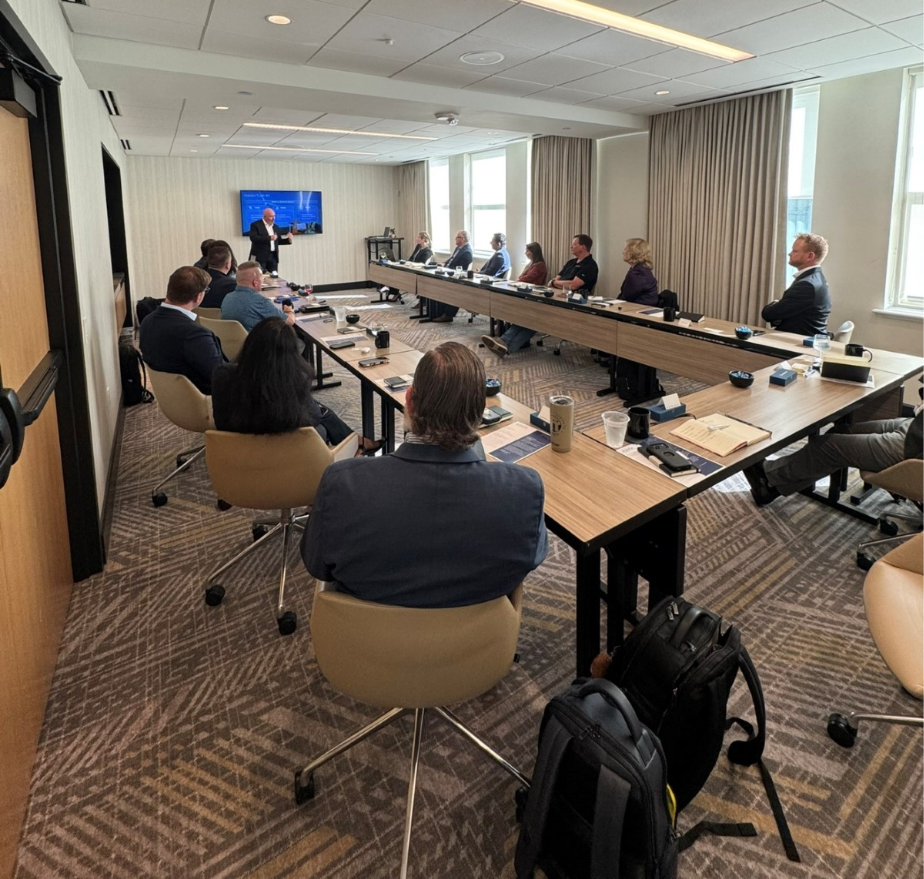
The best service supply chain organizations don’t just hit their metrics; they make the value of service visible across the entire business. A few practices stood out in the discussion.
They position service as a growth driver, not a cost center. Customer retention, renewals, product adoption, and revenue protection all run through service performance, and high performers connect those dots explicitly while making sure finance and commercial leadership can see them too.
They get involved earlier. Rather than reacting to product launches and commercial commitments after the fact, high-performing service teams are in the room during planning, with visibility into SLA commitments before they’re signed and lifecycle implications before the install base grows.
They use scenario planning to guide investment. What-if analyses, budget planning, and simulations help leaders align service-level goals with financial realities and give them the language to communicate tradeoffs upward.
They know that not every sale is a good sale. Revenue growth that doesn’t account for support costs, service complexity, and operational requirements puts pressure on margins rather than improving them, and the best leaders have the data to make that case.
Service Council research presented during the roundtable reinforced something the group already knew: a good plan is only as good as your ability to execute it. The research framed operating model maturity around three requirements, real-time signals, decision logic, and execution authority, because data visibility alone isn’t enough. Teams need to know what action to take, why it matters, and who has the authority to act.
In global organizations, this gets complicated quickly, with planning often centralized while execution happens regionally and regional teams held accountable for customer experience without full visibility into planning data or execution root cause. The answer isn’t choosing between central and regional models; it’s building shared visibility, governance, and accountability across both.
Our customers in the room discussed how capabilities across the BaxterPredict platform, including BaxterProphet, BaxterLynX, and Planning as a Service, are helping organizations move from reactive planning toward connected service supply chain orchestration.
The AI conversation generated some of the most engaged discussion of the day. Leaders see significant potential for AI in the service supply chain and are actively thinking about how to build toward it in a way that’s practical, trustworthy, and grounded in real operational value. We shared our staged approach built around understand, analyze, suggest, and act, which resonated because it meets organizations where they are today and creates a clear path forward rather than assuming a level of maturity that most teams are still working toward. The group aligned around a few consistent principles:
The group also discussed our SSC Agents and early work with customers across knowledge access, analytics, and exception management, with broad agreement that the path forward needs to be collaborative, grounded in real operational value, and built incrementally.
Beyond the content, service supply chain leaders consistently said they don’t get enough opportunities to compare notes with peers navigating the same complexity, and the quotes from the day reflected that.
“Even though we are in different industries, it was valuable to hear how much we share the same challenges.”
“I value the opportunity to engage with peers across diverse business models to gain insight, share challenges, and explore how each of us leverages Baxter Planning within our service parts strategies.”
That’s what the SSC Community is built for, and it’s why we remain committed to creating more of these opportunities.
The SSC Leadership Roundtable is one part of our ongoing commitment to bringing service supply chain leaders together to share what’s working, challenge what isn’t, and raise the bar for what’s possible. If you’re a service supply chain leader who wants to be part of future roundtables, executive discussions, and peer learning opportunities, reach out to our team at events@baxterplanning.com.

