The best leaders are rarely the product of a straight line, and the service supply chain is no exception. Their careers tend to involve unexpected turns, a clear understanding of their own strengths and blind spots, and at least one mentor that changed the trajectory. What they build over time is not just operational expertise, but a kind of leadership that holds up under pressure because it’s grounded in their whole self.
Five senior leaders from Otis Elevator, Schneider Electric, QuidelOrtho, Hologic, and Daktronics recently came together for a candid conversation about their careers, their leadership evolution, and the communities that helped shape them. What emerged were lessons for anyone building a career or a team in the service supply chain.
Varied Experience Is a Strength
None of the five leaders followed a straight path into service supply chain, and all of them see that as an advantage.
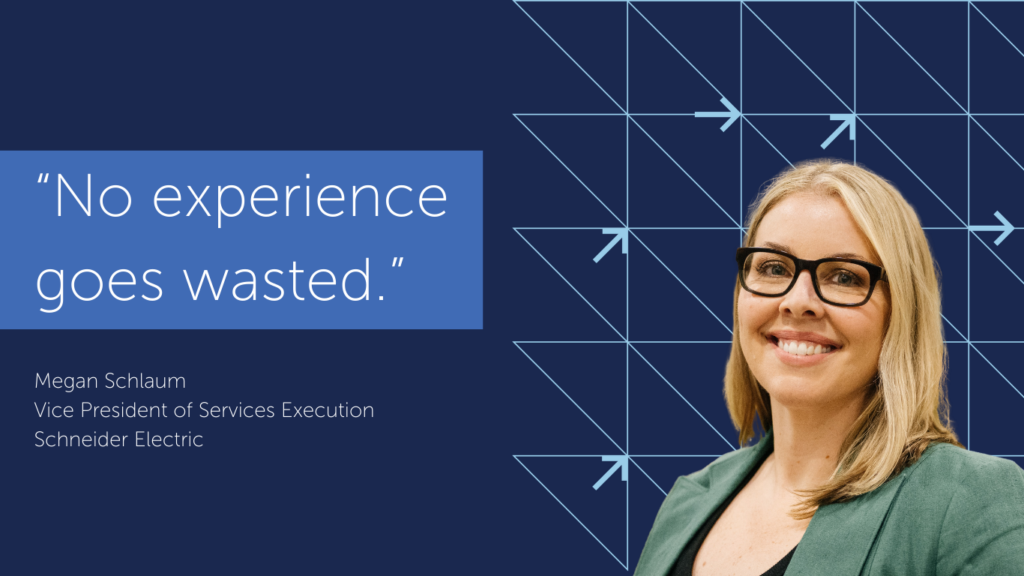
Kate Versprille, Vice President of Global Field Supply Chain and Logistics at Otis Elevator, started in chemistry and materials science before moving into operations and quality. Megan Schlam, Vice President of Services Execution at Schneider Electric, spent her twenties running a shelter for homeless youth in South Africa before returning to corporate supply chain. Linda Tucci, Global Director of Technical Support at Quidel Ortho, worked for years as a medical technologist in hospital labs. Each of them brought something distinctive to this field because of those experiences, not despite them.
The skills that matter most in service supply chain – building trust under pressure, thinking across complex systems, staying steady when things are uncertain – can be developed in all kinds of environments. Learning to recognize that in others, and in yourself, opens doors you might not have expected.
Sarah Rose, Global Vice President of Services at Daktronics, sees a single thread running through her own varied career: a commitment to teaching and helping others grow. The role changed. The industry changed. That core purpose didn’t.
When the work connects to something that genuinely matters, it takes on a different weight. Teresa Barnea, Director of Global Services Supply Chain at Hologic, puts it plainly: her job is making sure the right parts reach patients in time for a mammogram or biopsy. That’s about as real as it gets.
Authentic Leadership Builds Stronger Teams
Several leaders described a pattern that will feel familiar to many: feeling pressure to adapt their style to fit the room, then discovering over time that leading from their individual strengths was more effective than performing someone else’s version of leadership.
Sarah Rose described drifting from her natural instincts – the empathy, the collaborative approach, the focus on developing individuals – in favor of a harder-driving style she thought the environment required. A team member eventually told her the pressure had become unsustainable. That conversation was a turning point.
“I looked at my true identity and my true identity is a helper, is a teacher, and is a supporter. I’ve had to step back in my career and really let my authentic self come out.”
— Sarah Rose, Global Vice President of Services, Daktronics
Teresa Barnea experienced a similar journey. Coming up as a Division I college athlete, she entered the workplace modeling the behavior around her. She was told more than once she was too aggressive. What she eventually discovered was that she was most effective when she led as herself: someone genuinely curious about people and who builds followership through care and openness.
Megan Schlam’s lesson was about visibility. Her energy led some colleagues to underestimate her experience, and for two pivotal promotions, she proactively shared her background with decision-makers who hadn’t taken the time to understand it. Taking ownership of how others perceive you, she found, is part of the job.
Across all of these experiences, the takeaway is consistent: authenticity isn’t a soft concept. It builds the kind of trust and followership that sustains teams through the good times and the hard ones.
Mentorship Changes Trajectories
Every leader in the conversation pointed to relationships, not just roles or training programs, as formative.
“I was greatly influenced early on in my career by a self-appointed mentor who identified my potential before I fully recognized it in myself. That relationship was a defining experience that reinforced in me a sense of obligation to pass that on.”
— Linda Tucci, Global Director of Technical Support, Quidel Ortho
What made that relationship valuable, Linda Tucci reflects, was that her mentor helped her see herself more clearly and orient toward work that played to her strengths. It also created an obligation she’s carried forward ever since: to do the same for others.
Teresa Barnea’s father gave her a piece of advice she still carries: always hire the person who could one day be your boss. It’s a simple idea with a long tail. Leaders who genuinely invest in the people around them build something that compounds over time and that, more than any org chart or network list, is what a strong professional community actually looks like.
The Lessons Worth Carrying Forward
The leaders who navigate change most effectively are the ones who know who they are, who have been shaped by varied and sometimes unexpected experiences, and who invested in the people and communities around them along the way. The five leaders in this conversation are a good reminder of that. Their paths were different. Their lessons converge: embrace where you’ve been, lead from who you actually are, and invest in people the way someone once invested in you.
If you’d like to hear these lessons in their own words, you can watch the full conversation on demand.